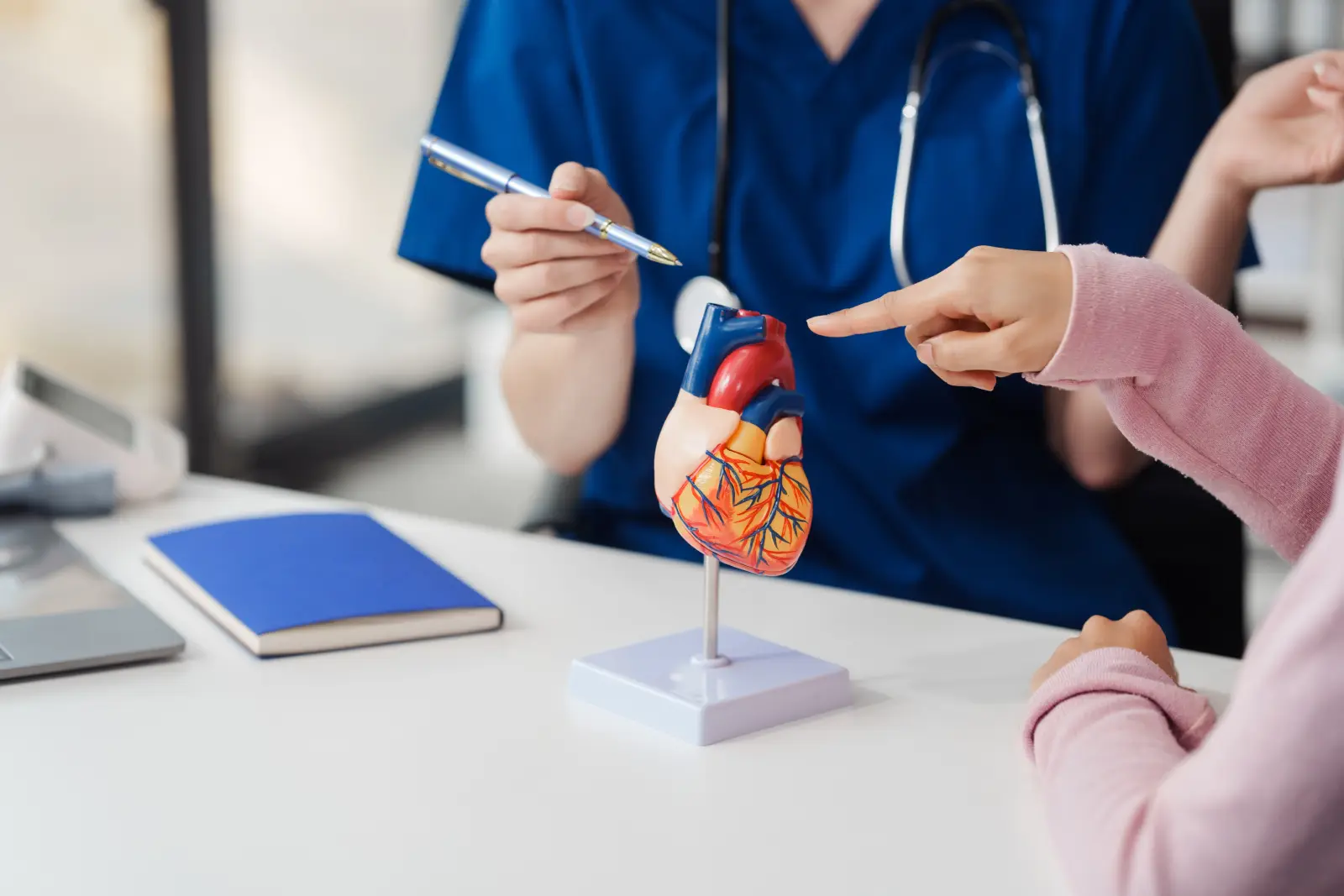
8 Warning Signs You Should See a Cardiologist
Eight warning signs that mean it's time to see a cardiologist, from chest pain and leg cramping to fatigue and palpitations. Dr. Jeffrey Tauth sees patients same-day in Hot Springs, AR.
Jeffrey G. Tauth, M.D., F.A.C.C.Board-Certified Interventional Cardiologist
Most people who end up with a serious cardiac diagnosis were not taken by surprise by their symptoms. The symptoms were there. They had been there for weeks, sometimes months. They were explained away as stress, aging, a pulled muscle, or something that would resolve on its own.
Cardiology is a field where that tendency to wait works against the patient. Coronary artery disease, peripheral artery disease, heart rhythm disorders, and heart failure are all progressive conditions. They do not reverse on their own, and they do not pause while a patient decides whether to call a doctor. The earlier they are caught and evaluated, the more treatment options are available and the better the outcomes tend to be.
In this post, board-certified interventional cardiologist Dr. Jeffrey Tauth, M.D., F.A.C.C. shares eight warning signs that warrant a call to a cardiologist rather than a wait-and-see approach.
1. Chest Pain, Pressure, or Tightness
Chest discomfort is the warning sign most closely associated with heart problems, and for good reason. Pain, pressure, or a squeezing sensation in the chest that comes on with physical exertion and eases with rest is the classic presentation of angina, which occurs when the heart muscle is not receiving adequate blood flow due to narrowed coronary arteries.
Not all cardiac chest pain announces itself dramatically. Some patients describe it as heaviness, a dull ache, or pressure rather than sharp pain. It may radiate to the jaw, left arm, shoulder, or between the shoulder blades. It may be brief. It may happen during activity and resolve quickly enough that patients rationalize it as indigestion or muscle tension.
Any chest discomfort that recurs, worsens over time, appears at rest as well as during exertion, or is accompanied by shortness of breath, sweating, or nausea needs to be evaluated by a cardiologist. It should not wait for a routine primary care appointment.
If chest pain comes on suddenly, severely, or in a way that feels different from anything before, call 911. That pattern can indicate a heart attack, which is a medical emergency.
2. Shortness of Breath Without a Clear Explanation
Becoming winded during intense exercise is expected. Becoming winded during ordinary activity (climbing a single flight of stairs, walking across a parking lot, carrying groceries from the car) is not.
Unexplained shortness of breath is one of the more common presentations of heart failure, a condition in which the heart does not pump blood efficiently enough to meet the body’s demands. It can also indicate significant coronary artery disease, where the heart muscle is working under strain during even mild exertion. In some patients, breathlessness that comes on when lying flat and eases when sitting up is a sign of fluid accumulating in the lungs.
If breathlessness has developed recently, has been progressively worsening, or is accompanied by fatigue, leg swelling, or waking up at night struggling to breathe, a cardiac evaluation is the appropriate next step.
Cardiovascular conditions do not pause while a patient decides whether to make the call.
3. Leg Pain, Cramping, or Weakness Specifically While Walking
Pain, cramping, or heaviness in the calves, thighs, or hips that comes on during walking and relieves with rest is the characteristic symptom of peripheral artery disease. PAD occurs when the arteries supplying blood to the legs become narrowed by plaque buildup, the same process that causes coronary artery disease in the heart.
PAD is one of the most underdiagnosed cardiovascular conditions because its symptoms are frequently attributed to something else. Patients are told they have arthritis, muscle fatigue, or normal aging. Meanwhile, the arterial narrowing continues, blood flow to the legs deteriorates, and the risk of cardiac events increases, because patients with PAD are at significantly elevated risk for heart attack and stroke as well.
Dr. Tauth performs more peripheral vascular procedures than any other cardiologist in the Hot Springs area, with diagnostic and treatment capabilities for PAD that exceed what local hospitals currently offer. A patient who has been told their leg symptoms are unrelated to their heart may benefit from a vascular evaluation.
4. Palpitations, a Racing Heart, or an Irregular Heartbeat
Most people become aware of their heartbeat during exercise, stress, or after caffeine. When the heart is beating normally, most people do not notice it at rest.
Palpitations that occur without a clear trigger, feel like a racing, fluttering, or skipping sensation, happen repeatedly, or are accompanied by dizziness or lightheadedness are worth a cardiologist visit. Atrial fibrillation, the most common sustained heart rhythm disorder, often presents this way. It causes an irregular and sometimes rapid heartbeat that patients may notice as a flutter or quiver in the chest. Left unmanaged, AFib significantly increases the risk of stroke.
Other arrhythmias cause similar symptoms and also require proper diagnosis and, in many cases, treatment. Pacemakers, implantable cardioverter-defibrillators, and implantable cardiac monitors are all tools used to diagnose and manage rhythm disorders. All of these devices may be implanted and managed at the Vascular Center of Hot Springs.

5. Unexplained or Disproportionate Fatigue
Fatigue is easy to attribute to a busy schedule, poor sleep, or general stress. Cardiac fatigue feels different: it is persistent, it does not respond to rest the way normal tiredness does, and it tends to be disproportionate to the level of activity that caused it.
When the heart is not pumping efficiently, the body reduces blood flow to non-essential systems to protect the heart and brain. Patients feel chronically tired as a result. This is one of the more common early presentations of heart failure, and it is also seen in patients with significant coronary artery disease whose heart muscle is under chronic strain.
Fatigue that has been present for weeks, that is accompanied by other symptoms on this list, or that has appeared without a convincing explanation is worth discussing with a cardiologist.
6. Swelling in the Legs, Ankles, or Feet
Fluid accumulating in the lower extremities, particularly by the end of the day or after prolonged sitting or standing, is a recognized symptom of heart failure. When the heart’s pumping function is reduced, fluid backs up in the venous system and settles in the legs and feet.
Leg swelling has other causes, including venous insufficiency and kidney disease, and not every case of ankle swelling points to the heart. But cardiac causes need to be ruled out rather than assumed away. A cardiologist can perform the imaging and laboratory testing needed to determine whether swelling has a cardiac origin. If it does, identifying it early and treating the underlying cause is far preferable to managing the downstream consequences of untreated heart failure.
Leg pain during walking is one of the most common symptoms patients are told to live with, and one of the most commonly misdiagnosed.
7. Dizziness, Lightheadedness, or Fainting
A single episode of dizziness without any other symptoms and with an identifiable cause (dehydration, standing up too quickly, a hot day) is usually not a reason for immediate concern. Recurring dizziness without a clear explanation is a different matter, and any episode of fainting or loss of consciousness warrants prompt cardiac evaluation.
Heart rhythm abnormalities are a common cardiac cause of both dizziness and fainting. When the heart is not generating an adequate rhythm, it may not be moving enough blood to the brain. These episodes can feel brief and minor, and resolve quickly, yet still represent a serious underlying problem.
An implantable cardiac monitor can record the heart’s rhythm continuously over weeks or months, capturing events that would not appear on a standard ECG or a 24-hour Holter monitor.
8. Risk Factors Without Recent Cardiac Evaluation
Some patients have no symptoms at all but carry a combination of risk factors that significantly elevates their likelihood of developing coronary artery disease or another cardiovascular condition. High blood pressure, high cholesterol, type 2 diabetes, a history of smoking, obesity, and physical inactivity all increase cardiovascular risk. A family history of early heart disease, meaning a parent or sibling who had a heart attack before age 55 in men or 65 in women, also meaningfully raises personal risk.
Patients who have already had a cardiac event are in a distinct category. Having had a prior heart attack, stent placement, or bypass surgery does not eliminate the risk of a second event; it elevates it. Ongoing management by an interventional cardiologist, including regular monitoring, medication management, and repeat testing when symptoms change, is appropriate for anyone in this group.
Dr. Tauth sees a large population of established cardiac patients at Hot Springs Heart and Vascular, patients who have had prior cardiac events and are managing their ongoing care alongside new patients presenting with symptoms for the first time. Both groups benefit from the same-day access, in-clinic diagnostics, and physician-directed structure that the practice is built around.
Do Not Wait to Get Evaluated
If you recognized any of the warning signs above, the next step is a cardiology evaluation. Dr. Jeffrey Tauth sees new patients at Hot Springs Heart and Vascular in Hot Springs, Arkansas. Call the clinic directly at (501) 767-4278. A staff member answers the phone and can schedule a same-day appointment if your symptoms are active. There is no automated system and no call center.
If symptoms are severe or suggest a cardiac emergency, call 911.
Written by
Jeffrey G. Tauth, M.D., F.A.C.C. · Board-Certified Interventional Cardiologist
Interventional cardiologist with more than 30 years of experience in cardiac and vascular care, practicing with Hot Springs Heart and Vascular in Hot Springs and Mena, Arkansas.