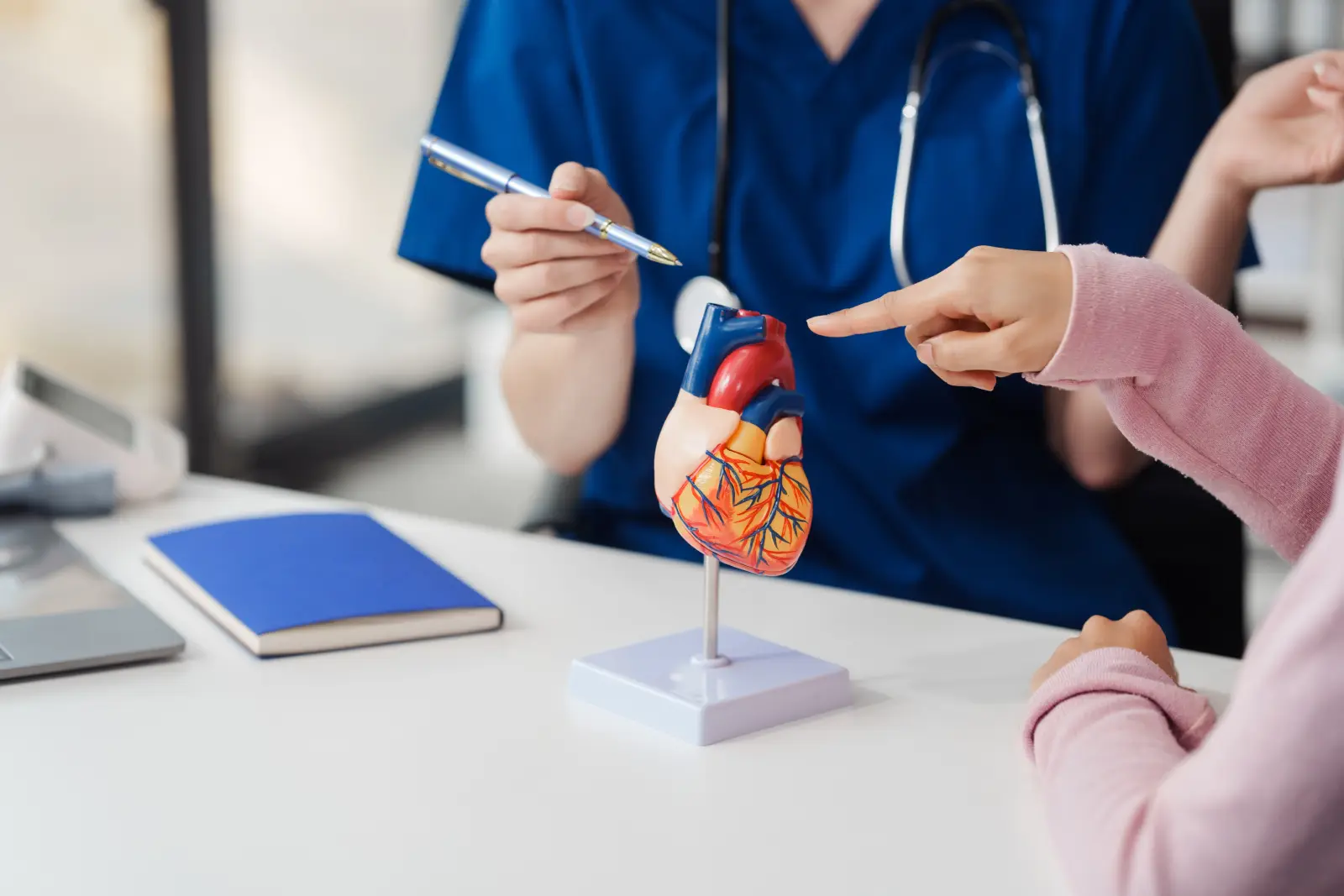
What Is Interventional Cardiology?
Dr. Jeffrey Tauth explains what interventional cardiology is, what conditions it treats, and how catheter-based procedures like stenting and angioplasty work for patients in Hot Springs, AR.
Jeffrey G. Tauth, M.D., F.A.C.C.Board-Certified Interventional Cardiologist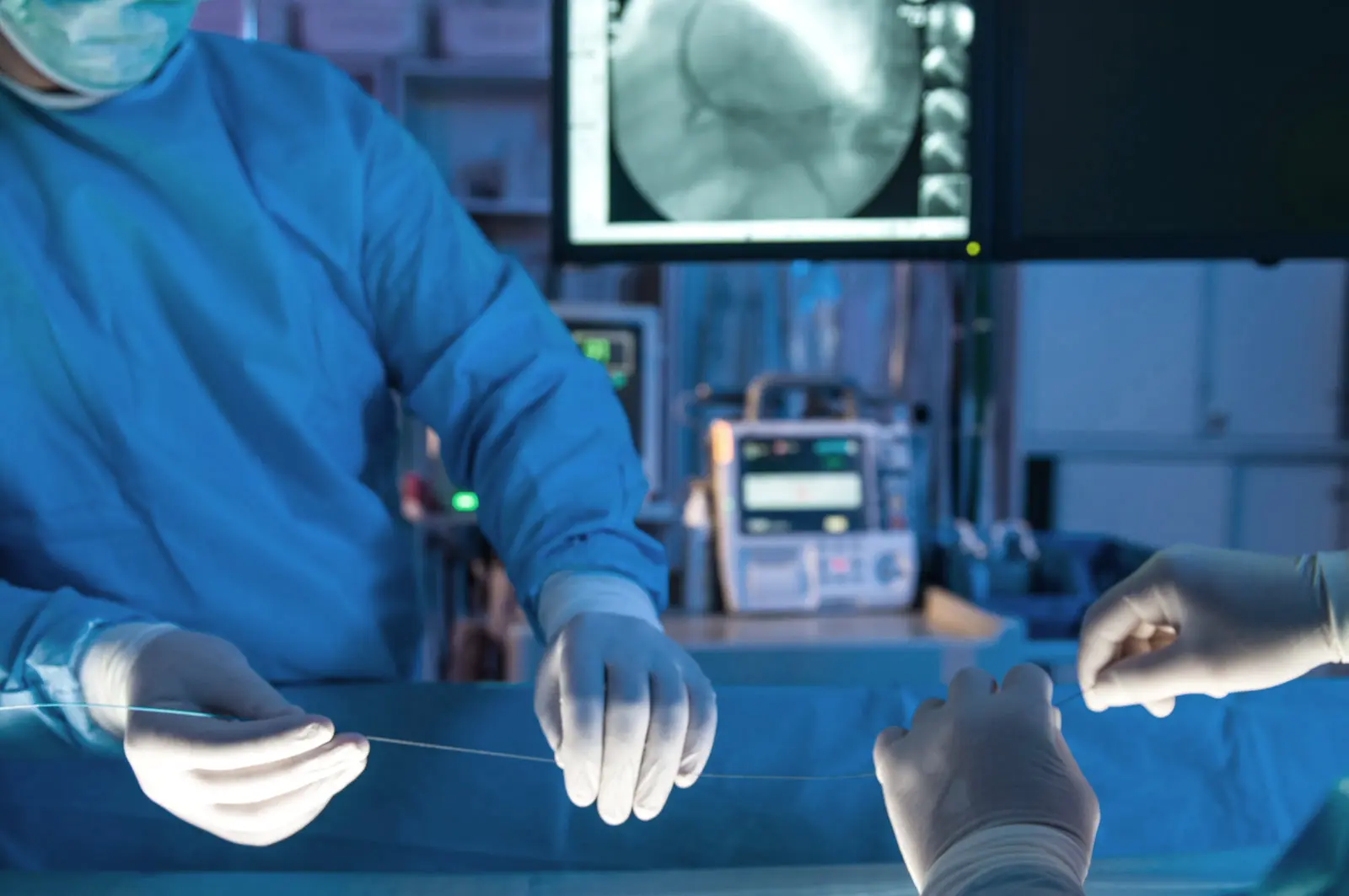
Cardiology is not a single specialty. It is divided into subspecialties, and the type of cardiologist a patient sees determines not just how their condition is diagnosed, but what treatment options are available to them.
Interventional cardiology is the subspecialty focused on treating heart and vascular disease through catheter-based procedures. For patients with coronary artery disease, peripheral artery disease, or certain heart rhythm problems, an interventional cardiologist can often diagnose and treat a condition in the same facility, without referring the patient elsewhere for a procedure. That distinction matters more than most patients realize when they are first referred to a cardiologist.
What Makes a Cardiologist “Interventional”
A general cardiologist manages heart conditions through medication, lifestyle guidance, and monitoring. An interventional cardiologist does all of that and also performs procedures inside the arteries and heart using catheters, thin flexible tubes inserted through a small incision, typically in the wrist or groin.
The training pathway is longer than standard cardiology. After medical school, a physician completes a residency in internal medicine, a fellowship in general cardiology, and then an additional fellowship specifically in interventional techniques. That sequence represents years of post-graduate training focused on cardiovascular disease before an interventional cardiologist ever operates independently.
Board certification in interventional cardiology and fellowship in the American College of Cardiology (F.A.C.C.) reflect a physician who has met the training and examination standards set by those credentialing bodies. Certification is not a one-time designation. It requires ongoing participation in continuing medical education and periodic recertification.
Dr. Jeffrey Tauth, M.D., F.A.C.C., is a board-certified interventional cardiologist who has practiced in Hot Springs, Arkansas for more than 30 years. He completed his medical degree at the University of Arkansas for Medical Sciences and his fellowship in Cardiovascular Disease before establishing his practice in central Arkansas.
What Interventional Cardiologists Treat
Most patients referred to an interventional cardiologist have a condition involving blocked or narrowed arteries, either in the heart or in the legs. The conditions are related in that they share the same underlying biology, but they present differently and require different approaches.
Coronary artery disease (CAD)
CAD develops when plaque accumulates inside the arteries that supply blood to the heart muscle. As those arteries narrow, the heart receives less blood, and symptoms such as chest pain, shortness of breath, and fatigue develop. In cases where an artery becomes fully blocked, the result is a heart attack. CAD is the most common condition treated by interventional cardiologists, and it is the primary focus of Dr. Tauth’s practice in Hot Springs. He sees two distinct patient populations: those presenting with symptoms for the first time who need an initial evaluation, and those with established CAD managing their cardiac health after a prior heart attack, stenting procedure, or bypass surgery.
Peripheral artery disease (PAD)
PAD follows the same process but in the arteries of the legs rather than the heart. Patients typically notice cramping, weakness, or pain in the legs during walking that eases with rest. PAD is frequently underdiagnosed because those symptoms are often attributed to aging or muscle problems rather than a circulation issue. It is worth noting that patients with PAD are at significantly elevated risk for coronary artery disease and cardiac events, because the same plaque buildup that affects the leg arteries is usually occurring elsewhere in the vascular system as well. Dr. Tauth performs more peripheral vascular procedures than any other cardiologist in the Hot Springs area, with treatment capabilities that exceed what local hospitals currently offer for this condition.
Heart rhythm disorders
Rhythm disorders that require device-based treatment also fall within the interventional cardiologist’s scope. Atrial fibrillation, palpitations, abnormally slow heart rates, and other arrhythmias may be managed through pacemakers, implantable cardioverter-defibrillators (ICDs), or implantable cardiac monitors (ICMs) that continuously record the heart’s electrical activity. Dr. Tauth implants and manages all of these devices at the Vascular Center of Hot Springs.
Heart failure
Heart failure is a condition in which the heart does not pump blood as effectively as it should. It can result from prior heart attacks, longstanding high blood pressure, or other causes that weaken or stiffen the heart muscle. Patients with heart failure often experience shortness of breath, fatigue, and fluid retention. A full workup to identify the underlying cause guides the treatment approach, which may include medication adjustment, device therapy, or intervention.
An interventional cardiologist completes years of additional fellowship training beyond standard cardiology before ever practicing independently.
How Catheter-Based Procedures Work
Catheter-based procedures allow a cardiologist to reach and treat blockages inside arteries without open surgery. A catheter is inserted into an artery at the wrist or groin and guided through the blood vessels to the area that needs treatment. The physician tracks the catheter’s position using fluoroscopy, a continuous X-ray imaging technique that shows the vessels in real time. Contrast dye injected through the catheter makes the arteries visible on the imaging screen, allowing the physician to identify exactly where blockages are and how severe they are.
Once in position, the physician has several options depending on what the artery requires:
- Angioplasty uses a small balloon at the tip of the catheter to compress plaque against the artery wall, widening the vessel and restoring blood flow through the narrowed segment.
- Stenting places a small mesh tube inside the artery after angioplasty to hold the vessel open. Stents are used routinely in both coronary and peripheral interventions. Modern drug-eluting stents are coated with medication that helps prevent the artery from re-narrowing after the procedure.
- Atherectomy removes or breaks down plaque using a catheter-mounted cutting or ablation device. It is used when plaque is heavily calcified, when the vessel anatomy makes stenting alone insufficient, or as preparation for stent placement in a particularly complex lesion.
These procedures take place in a catheterization laboratory and patients are typically discharged the same day. Recovery is far shorter than open surgical alternatives, and patients are generally back to normal activity within a few days.
What to Expect From the Diagnostic Process
Before any procedure takes place, an interventional cardiologist will conduct a thorough evaluation to understand what is actually happening in the arteries and why. This typically includes a detailed history, a physical exam, and one or more non-invasive tests.
At Hot Springs Heart and Vascular, diagnostic testing is performed in-clinic. Patients do not need to be sent elsewhere for an echocardiogram, a stress test, nuclear cardiac imaging, or vascular studies. All of these are available on-site, which means results are reviewed by Dr. Tauth directly rather than returning from an outside facility days later.
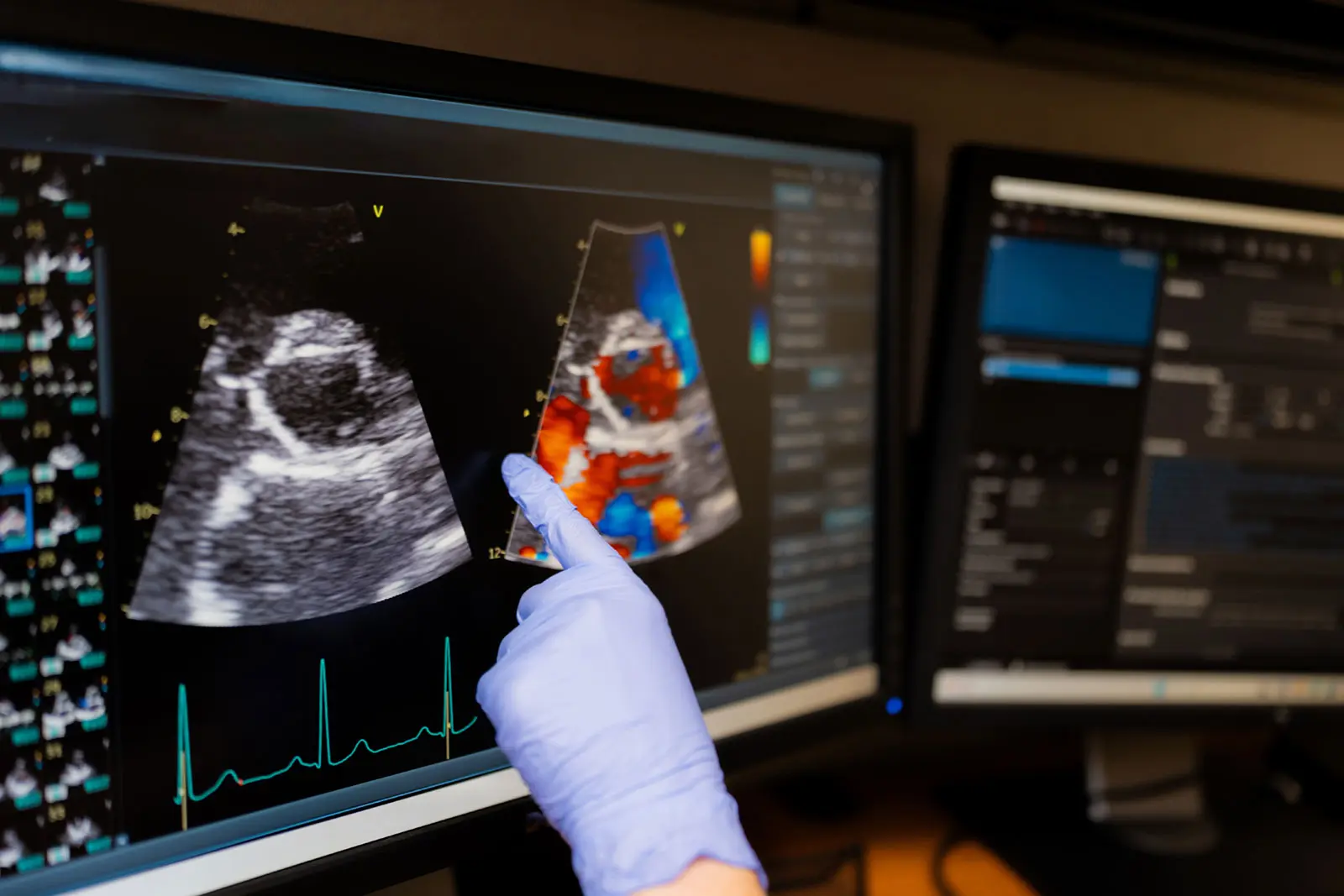
When non-invasive testing suggests that a closer look is needed, a cardiac catheterization provides a definitive picture of the coronary arteries. This is both a diagnostic procedure and, when a blockage is found that needs treatment, the same procedure can be extended to perform the intervention in the same session.
For many patients, an interventional cardiologist can diagnose and treat a condition in the same facility, without a referral elsewhere.
Why the Facility Matters
Hospital-based catheterization labs operate under institutional contracts that can limit which devices a physician selects for a given patient. Scheduling is managed by the hospital’s administrative system, which affects how quickly a patient can be seen. The physician’s clinical judgment operates within those institutional parameters.
The Vascular Center of Hot Springs is an independent ambulatory surgical center, the first cardiovascular ASC in central Arkansas, operated entirely by Dr. Tauth’s practice. Device selection is made on clinical grounds alone. Patients are not scheduled through a hospital system. When a patient calls the clinic with symptoms, a staff member at the Hot Springs location answers directly and can place a same-day appointment without routing the call through a centralized system.
For patients in Hot Springs and central Arkansas who have been told they need a cardiac catheterization, a stent, or a vascular procedure, that structure is worth understanding before choosing where to have it done.
When to See an Interventional Cardiologist
A primary care physician or general cardiologist typically refers a patient to an interventional cardiologist when testing suggests significant artery disease, or after a cardiac event such as a heart attack that requires ongoing procedural management.
Some patients come to Dr. Tauth directly, particularly those with a prior history of heart attacks, stents, or bypass surgery who want a cardiologist experienced in managing complex, long-term cardiac care. Others arrive after abnormal stress test results, new or worsening symptoms, or a workup that points toward a structural problem in the coronary or peripheral arteries.
The referral pathway matters less than acting on it promptly. Coronary artery disease, peripheral artery disease, and most arrhythmias are progressive conditions. The earlier they are evaluated and managed, the more treatment options remain available.
Patients in Hot Springs and central Arkansas can call Hot Springs Heart and Vascular directly at (501) 767-4278. A staff member answers the phone, and same-day appointments are available for patients with active symptoms.
Written by
Jeffrey G. Tauth, M.D., F.A.C.C. · Board-Certified Interventional Cardiologist
Interventional cardiologist with more than 30 years of experience in cardiac and vascular care, practicing with Hot Springs Heart and Vascular in Hot Springs and Mena, Arkansas.