Cardiac Stenting in Hot Springs: What Patients Need to Know Before Their Procedure
Dr. Jeffrey Tauth explains cardiac stenting in Hot Springs, AR: how the procedure works, what to expect before and after, and how it fits into CAD care.
Jeffrey G. Tauth, M.D., F.A.C.C.Board-Certified Interventional Cardiologist
For many patients with coronary artery disease, a cardiac stent procedure is the point where months of symptoms, testing, and uncertainty finally resolve into a clear plan. It is also the procedure patients most often arrive at with the least information about what to expect.
Cardiac stenting is Dr. Tauth’s highest-volume procedure, and interventional coronary procedures represent the core of his 30-year practice in central Arkansas. A board-certified interventional cardiologist, Dr. Tauth performs cardiac stent procedures at the Vascular Center of Hot Springs, the first cardiovascular ambulatory surgical center in central Arkansas.
In this post, Dr. Tauth covers what a cardiac stent is, how the procedure works, what patients should expect before and after, and how stenting fits into the broader management of coronary artery disease.
What Is a Cardiac Stent?
A cardiac stent is a small, expandable mesh tube placed inside a narrowed or blocked coronary artery to restore blood flow to the heart muscle. Stents are made of metal (most commonly a cobalt-chromium or stainless steel alloy) and are designed to remain in the artery permanently, holding the vessel walls open after a blockage has been cleared.
Bare-Metal Stents vs. Drug-Eluting Stents
There are two primary types of coronary stents used today:
- Bare-metal stents (BMS): The original design, made of plain metal mesh. Still used in certain clinical situations, particularly when a patient cannot tolerate long-term antiplatelet medication
- Drug-eluting stents (DES): The current standard for most coronary interventions. These stents are coated with medication that is slowly released into the artery wall over time, significantly reducing the rate of restenosis, the process by which a stented artery can re-narrow
Drug-eluting stents are now used in the vast majority of cardiac stenting procedures because of their lower restenosis rates compared to bare-metal stents. The specific type and size of stent used in any given procedure depends on the individual patient’s artery anatomy and the characteristics of the blockage.
When Is a Stent Recommended?
Cardiac stenting is typically recommended when:
- Non-invasive testing (stress test, nuclear imaging) indicates a significant reduction in blood flow through one or more coronary arteries
- Cardiac catheterization confirms a blockage severe enough to warrant intervention
- A patient is experiencing unstable angina or has had a heart attack requiring immediate restoration of blood flow
- Symptoms persist despite medication and lifestyle management
Patients with more than two significantly blocked arteries may be evaluated for bypass surgery rather than stenting, depending on the anatomy and overall clinical picture. That determination is made on a case-by-case basis.
How the Cardiac Stenting Procedure Works
Before the Procedure
Preparation for a cardiac stent procedure begins with a pre-procedural evaluation. Patients are typically instructed to fast for several hours before the procedure. Most cardiac medications are continued, though some (particularly certain diabetes medications and blood thinners) may be adjusted based on individual circumstances. Patients are screened for allergies to contrast dye, which is used during the procedure to make the arteries visible under X-ray imaging.
On the day of the procedure, patients receive a local anesthetic at the access site and medication to help them relax. General anesthesia is not required for most coronary stenting procedures.
During the Procedure
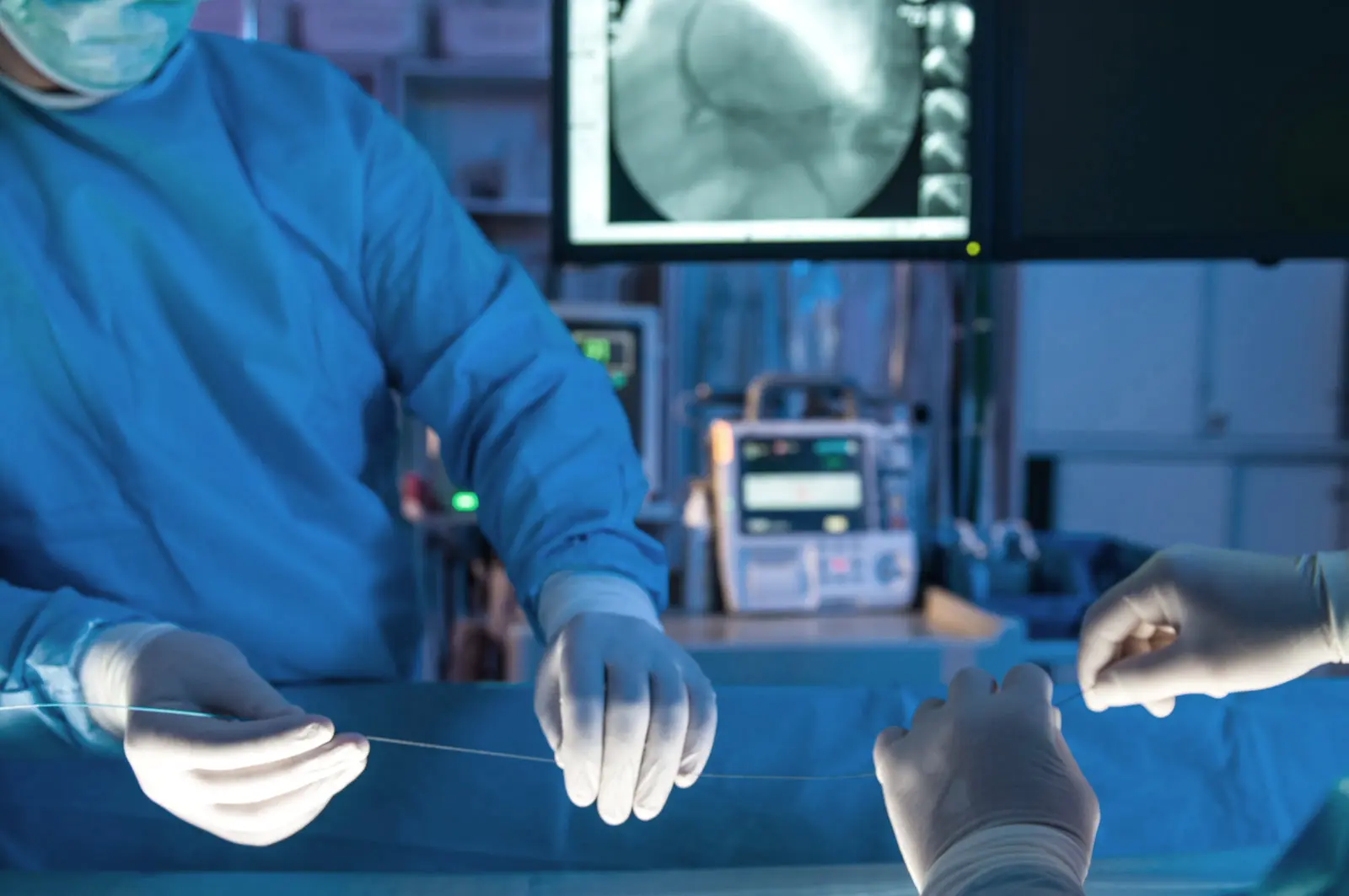
The procedure begins with arterial access, most commonly at the wrist (radial access) or the groin (femoral access). A small incision is made, and a thin sheath is inserted into the artery. A guidewire is passed through the sheath and advanced to the coronary arteries under X-ray guidance.
Once the guidewire is in position:
- A catheter with a deflated balloon and compressed stent is advanced over the guidewire to the site of the blockage
- Contrast dye is injected to confirm positioning under fluoroscopy
- The balloon is inflated, expanding the stent against the artery wall and compressing the plaque
- The balloon is deflated and removed, leaving the stent in place
- A final angiogram confirms the stent is properly positioned and blood flow has been restored
Patients typically feel pressure during the balloon inflation but should not feel pain. The procedure itself usually takes between 30 minutes and two hours depending on the complexity of the blockage and the number of vessels treated.
After the Procedure
Most patients who undergo cardiac stenting at the Vascular Center of Hot Springs are discharged the same day. Recovery at home typically involves:
- Keeping activities light for several days following the procedure
- Avoiding strenuous exercise or heavy lifting for a period determined by Dr. Tauth based on the individual case
- Monitoring the access site for bruising, which is common and expected, and for unusual swelling, firmness, or increasing pain
- Watching for symptoms that warrant a call to the clinic: fever, chest pain, increasing pain or swelling at the access site, or shortness of breath
The access site heals quickly in most cases, particularly with radial (wrist) access, which has a shorter recovery and lower complication rate than femoral (groin) access.
Medications After a Cardiac Stent
Antiplatelet medication is critical after a stent procedure and non-negotiable in the early recovery period. Most patients are placed on dual antiplatelet therapy (typically aspirin combined with a second antiplatelet agent) for a period determined by the type of stent placed and the patient’s overall clinical situation. Drug-eluting stents require a longer course of dual antiplatelet therapy than bare-metal stents.
Stopping antiplatelet medications early without guidance from a cardiologist significantly increases the risk of stent thrombosis, a sudden clot forming inside the stent, which can cause a serious cardiac event. This is one of the most important things patients need to understand before leaving the clinic.
Other medications commonly continued or initiated after stenting include statins, beta-blockers, and ACE inhibitors or ARBs, depending on the patient’s individual history and risk factors.
What Stenting Does and Does Not Do
A stent restores blood flow through the treated artery. It does not cure coronary artery disease or stop the atherosclerotic process that caused the blockage. Patients who receive a cardiac stent still have CAD, and that disease continues to require ongoing management.
The treated artery can re-narrow over time, particularly with bare-metal stents. Other arteries can develop new blockages. The risk factors that contributed to the original blockage (high blood pressure, high cholesterol, diabetes, smoking) continue to drive disease progression unless they are actively managed.
This is why the stent procedure is one part of a larger management plan, not the end of it. Regular follow-up with an interventional cardiologist, ongoing medication management, and repeat testing when symptoms change are all part of what keeps post-stent patients out of the hospital over the long term.
A stent restores blood flow through the treated artery. It does not cure coronary artery disease or stop the process that caused the blockage in the first place.
Why the Facility Matters for Cardiac Stenting
Not all cardiac stent procedures are performed in the same environment. Hospital-based catheterization labs operate under institutional purchasing contracts that can limit the range of stent types and sizes available for a given procedure. An independent ambulatory surgical center is not subject to those constraints.
At the Vascular Center of Hot Springs, Dr. Tauth selects devices from multiple manufacturers based solely on what best fits the individual patient’s anatomy and clinical situation. For a procedure as technically specific as coronary stenting (where artery diameter, lesion length, and plaque characteristics all influence device selection) that flexibility has direct clinical implications.
The center is also a more personalized setting than a hospital cath lab. Patients are not moving through a large institutional system. They arrive, have their procedure, and recover in the same facility managed by the same physician and staff who will see them at follow-up.
Schedule a Consultation With Dr. Tauth
If you have been told you may need a cardiac stent, or if you have questions about coronary artery disease and your treatment options, Dr. Jeffrey Tauth welcomes new patients at Hot Springs Heart and Vascular. Call (501) 767-4278 directly. A staff member answers the phone, and same-day appointments are available for patients with active cardiac symptoms.
Written by
Jeffrey G. Tauth, M.D., F.A.C.C. · Board-Certified Interventional Cardiologist
Interventional cardiologist with more than 30 years of experience in cardiac and vascular care, practicing with Hot Springs Heart and Vascular in Hot Springs and Mena, Arkansas.